【Field Trip】Asia Pacific Business Environment & Management (IBBA151) Field Trip to HOPAX (聚和國際), Kaohsiung, on April 29, 2026
Written by Jan Dariusz Filipp
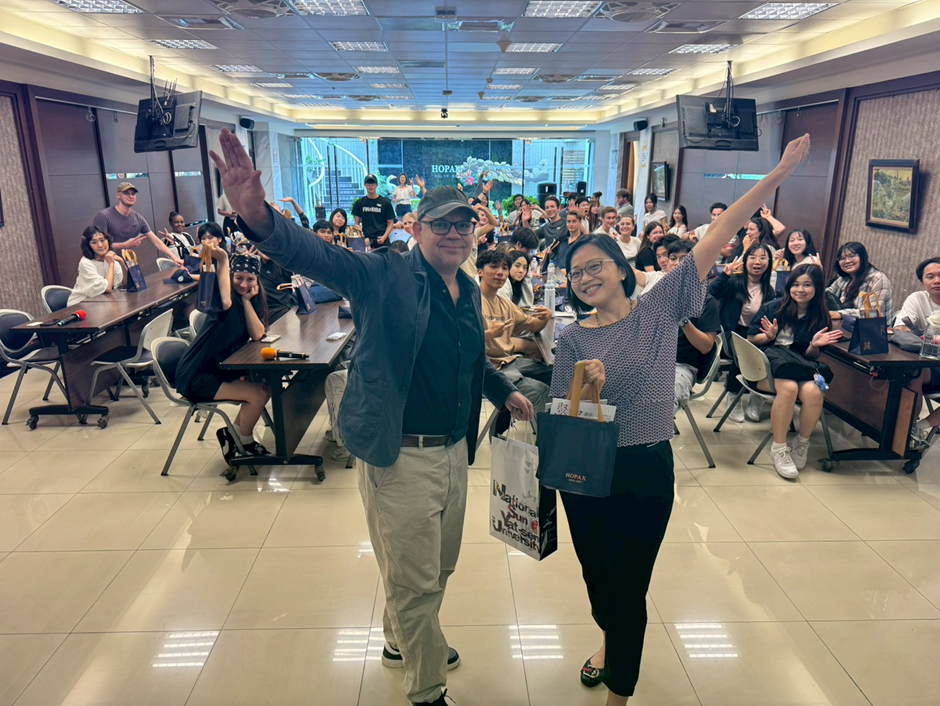
As economic integration across the Asia-Pacific accelerates, firms are increasingly compelled to navigate complex shifts in market structures, technological disruption, and intensifying global competition. Within this dynamic landscape, Taiwanese enterprises – particularly those anchored in advanced manufacturing and chemical innovation – have emerged as critical intermediaries linking regional production networks with global value chains.
Against this backdrop, students from the Asia Pacific Business Environment & Management (IBBA151) course at National Sun Yat-sen University, under the guidance of Professor Ryan Brading, participated in a field-based learning visit to the headquarters of HOPAX (聚和國際) in Daliao, Kaohsiung. Supported by the teaching assistant and administrative team, the visit engaged 51 students (of whom 21 were exchange students, 5 were full-time international students and 24 local students) in a direct examination of the strategic operations, innovation capabilities, and international positioning of a globally competitive Taiwanese firm, offering a valuable bridge between theoretical frameworks and real-world industrial practice.
Founded in 1975, HOPAX has developed into a globally competitive leader in specialty chemicals, particularly in thermal paper coatings, specialty materials, and consumer stationery products. Its expansion into international markets in the 1980s marked a clear transition toward an export-oriented and globally integrated enterprise. Today, the company operates a strategically distributed production network, with high-value activities such as R&D and advanced chemical production anchored in Taiwan, while large-scale manufacturing extends across China and Southeast Asia to optimize costs, logistics, and market access. This configuration reflects a typical Asia-Pacific strategy, balancing innovation at home with regional production networks to sustain efficiency and global competitiveness.
Located in the Daliao Industrial Zone, HOPAX operates within one of Taiwan’s key industrial clusters, developed as part of the government’s Ten Major Construction Projects. This reflects the Development paradigm emphasised in the Asia Pacific Business Environment & Management curriculum, where state-led infrastructure and policy support in the 1970s laid the foundation for industrialisation. Such conditions enabled firms like HOPAX to scale, upgrade, and compete globally, offering students a clear illustration of how long-term industrial policy can shape sustained business success in Taiwan.
The visit began with an overview of HOPAX’s historical development, business model, and global strategy, providing a structured foundation for linking theory to practice. Students were then divided into three groups and rotated across key operational units such as sales, production, and research laboratories – allowing them to observe how innovation, manufacturing processes, and international market engagement – are systematically integrated within a globally oriented firm. This structured exposure reinforced core course themes by demonstrating how different organisational functions align to support competitiveness in an Asia-Pacific context.
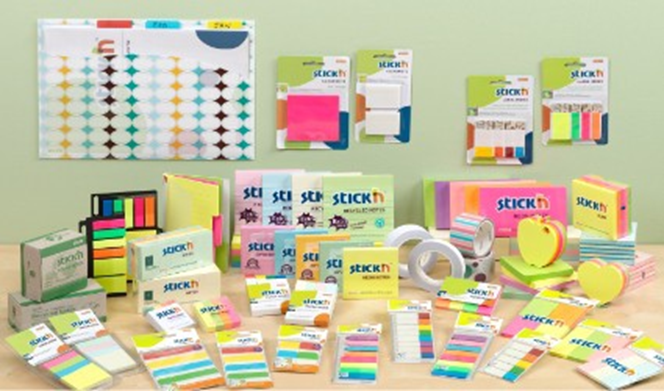
Hopax. (n.d.). Stick'N products [Image].https://www.hopax.com/en/about/organization
One of the highlights of the session was the introduction of HOPAX’s well-known consumer product line: self-adhesive notes (commonly known as sticky notes). Developed in the 1980s through the innovative application of the company’s paper and adhesive technologies, this product has evolved into a globally distributed item. Today, HOPAX’s self-adhesive notes are sold across Asia, Europe, and the Americas, forming a widely recognized everyday office product. Several students with prior work or internship experience in office environments immediately recognized these items, reinforcing their market presence. As part of the visit, each participant also received company samples, including these products, strengthening the tangible link between classroom concepts and real-world industrial applications.
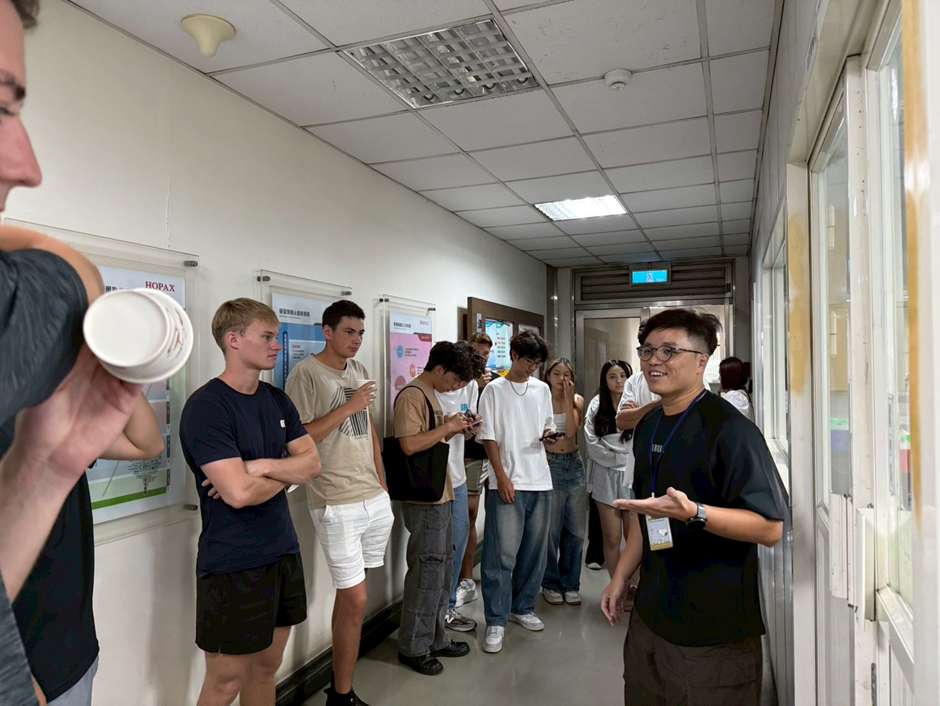
Another key takeaway from the visit was HOPAX’s strategic approach to attracting international talent as part of its broader globalisation agenda. The company actively recruits foreign professionals for roles in sales and business development, recognising that cross-cultural communication and market-specific knowledge are critical for expanding into international markets. During the session, HOPAX representatives also signalled a clear intention to attract students from National Sun Yat-sen University into future international sales roles, positioning the firm as an accessible entry point for global careers. This approach reflects a deliberate effort to build a diverse, internationally oriented workforce, while simultaneously strengthening the company’s ability to engage with clients across different cultural and regional contexts.
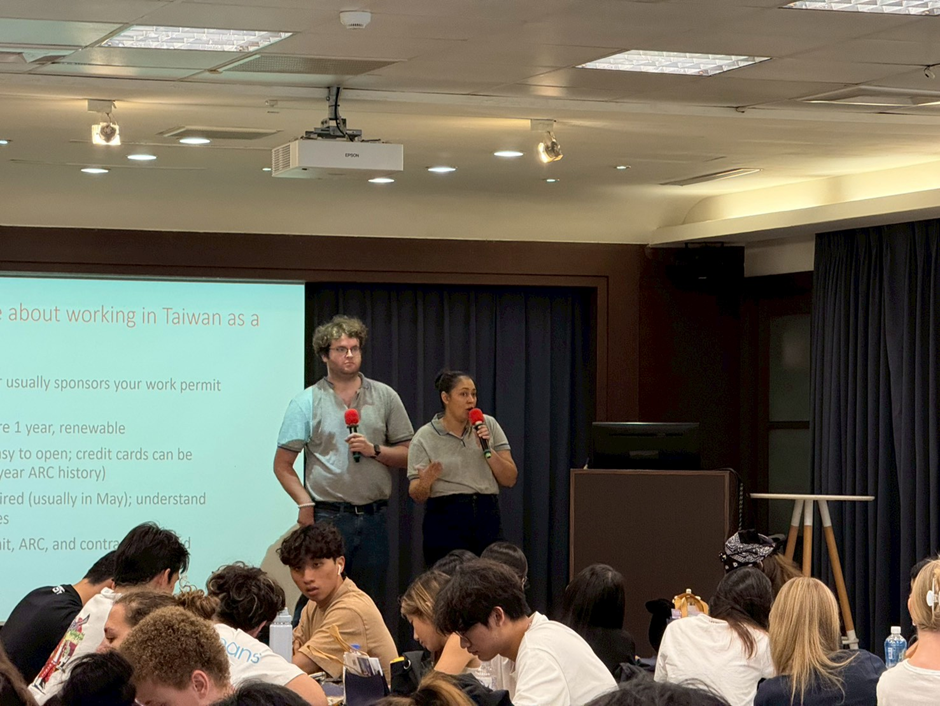
The session concluded with a sharing segment led by two international employees – one from the United States and another from Eswatini (formerly Swaziland) – who offered firsthand insights into working within HOPAX’s global structure. Their experiences reinforced a key point highlighted throughout the visit: that international sales operations are coordinated by a diverse, multinational team. This not only connects directly with the company’s strategy of attracting foreign talent but also positions HOPAX as one of the few firms in Southern Taiwan to meaningfully integrate international professionals into its core business functions, enhancing both cross-cultural communication and responsiveness to global markets.
Throughout the visit, students were encouraged to connect theoretical frameworks from the classroom with practical applications in industry, particularly the concept of Economic Development in Taiwan as discussed in the course. Observing how HOPAX leverages innovation, global supply chains, and human capital provided a concrete illustration of how firms evolve within a development trajectory shaped by state support, industrial upgrading, and integration into global markets. The experience highlighted the importance of adaptability, international perspective, and strategic resource management, while reinforcing how Taiwan’s broader development model continues to underpin firm-level competitiveness in the Asia-Pacific business environment.
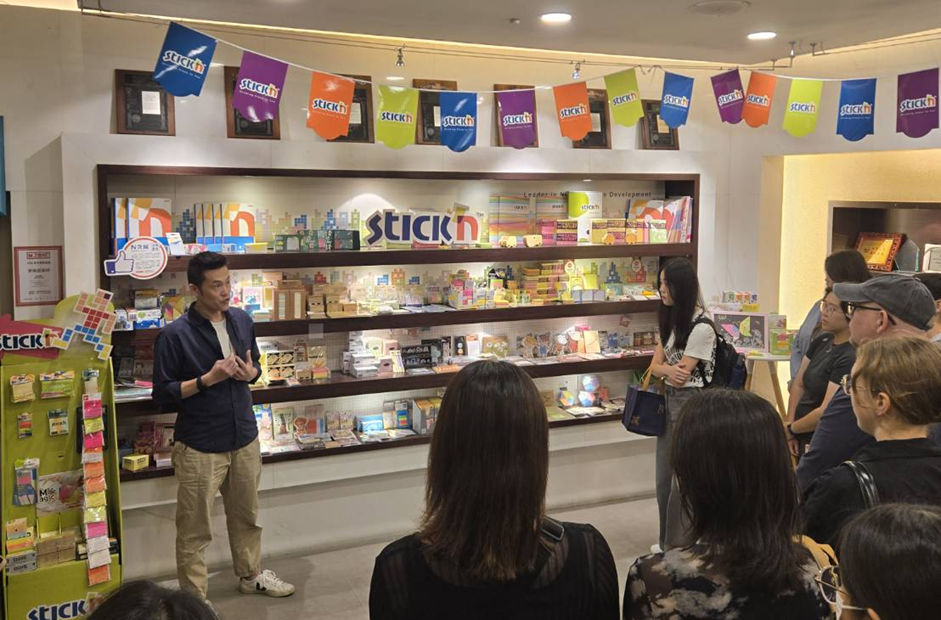
By the end of the trip, students gained a deeper appreciation for the complexities of managing a globally integrated business. From the foundations of Taiwan’s state-led economic development to the coordination of international manufacturing networks and the integration of a cross-cultural workforce, HOPAX demonstrated how Taiwanese firms continue to adapt, upgrade, and sustain competitiveness on the global stage.
Special thanks are extended to Ms. Mei-Lin Kuo (郭美璘) and the HOPAX team, particularly HR Manager Sharon Li, for their warm hospitality and insightful guidance throughout the visit. Additional appreciation is given to International Affairs Officer Joyce (陳星橞), whose coordination, together with the International Business Office, was instrumental in making this field trip possible. Finally, sincere gratitude is extended to Professor Ryan Brading, and Teaching Assistant Yanek Filipp (張元帥) for their active supervision and organization of this valuable learning experience.