【SPEECH】Exploring Sustainable Business and Innovation: Guest Lecture by Swedish Ambassador Mikael Anzén
Written by Shania Andea Perdana
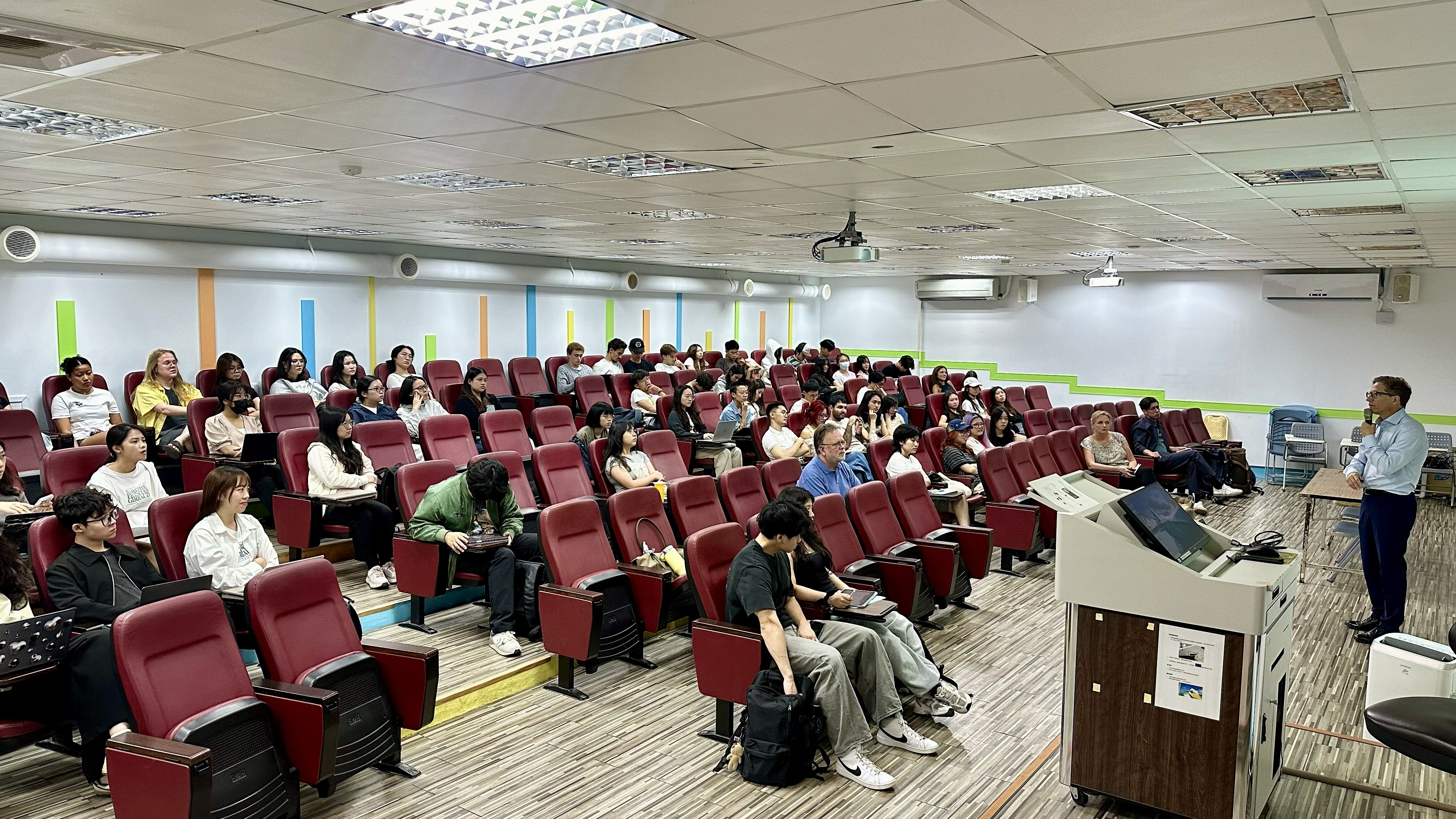
We were honored to welcome Mr. Mikael Anzén, Swedish Ambassador for Sustainable Business and Innovation from the Swedish Ministry of Foreign Affairs, to deliver a guest lecture for Economics class students in the IBBA (International Business Bachelor Program) on April 22, 2026. During his week-long visit to Taiwan, where he is meeting Swedish companies, Mr. Anzén took time from his busy schedule to visit National Sun Yat-sen University and share his insights on sustainable business and innovation.
Mr. Anzén began the lecture by presenting a comparison between Sweden and Taiwan, including key indicators such as country size, population, GDP, economic growth, and the number of unicorn companies. He then compared the major industries in both countries, highlighting Sweden’s strong focus on sustainability. Building on this, he explained the close relationship between industry and innovation, emphasizing that successful innovation requires not only tangible resources such as brainpower, capital, energy, and intellectual property, but also “soft” enablers, including incentives, resource accessibility, cross-functional collaboration, and a high level of trust in partnerships. He noted in particular the strong emphasis Swedish culture places on teamwork.
The lecture continued with a discussion on fossil-free energy. Mr. Anzén presented comparative data on energy usage in Sweden and Taiwan, noting that Sweden relies almost entirely on non- fossil energy sources, with hydropower, nuclear power, and wind power (accounting for approximately 90-95%). He further explained that Sweden’s strategies for trade, investment, and global competitiveness are shaped by increasing global competition, the need to strengthen its innovation environment, opportunities arising from green and digital transitions, and the necessity of expanding into new markets. In this context, innovation plays a crucial role in maintaining competitiveness.
To support sustainable business development, the Swedish government implements a range of policies and initiatives, including trade promotion and export financing mechanisms such as the Export Credit Agency (Exportkreditnämnden, EKN), as well as broader support measures through organizations like the Swedish International Development Cooperation Agency (SIDA).
Mr. Anzén also addressed the importance of responsible business conduct. He explained that it is driven by factors such as long-term business sustainability, competitiveness, consumer pressure, and adherence to international guidelines. Current trends further reinforce this shift, including a movement from cost-focused to value-focus, the prioritization of climate change, growing attention to social and human resource issues, increased transparency (particularly regarding bribery), and expanding regulatory frameworks in the European Union and globally.
In conclusion, Mr. Anzén delivered a highly relevant lecture for IBBA Economics students, offering valuable insights into how sustainable practices are supported by government policies and shaped by market forces, such as increasing consumer preference for sustainable products. The lecture also provided students with a broader understanding of global progress in sustainability.
.jpg)