【Field Trip】IBBA153 Sustainability of Global Enterprise|Field Trip to De Hostel, Zhutian (竹 田) on December 1st 2025
Written by Jan Dariusz Filipp
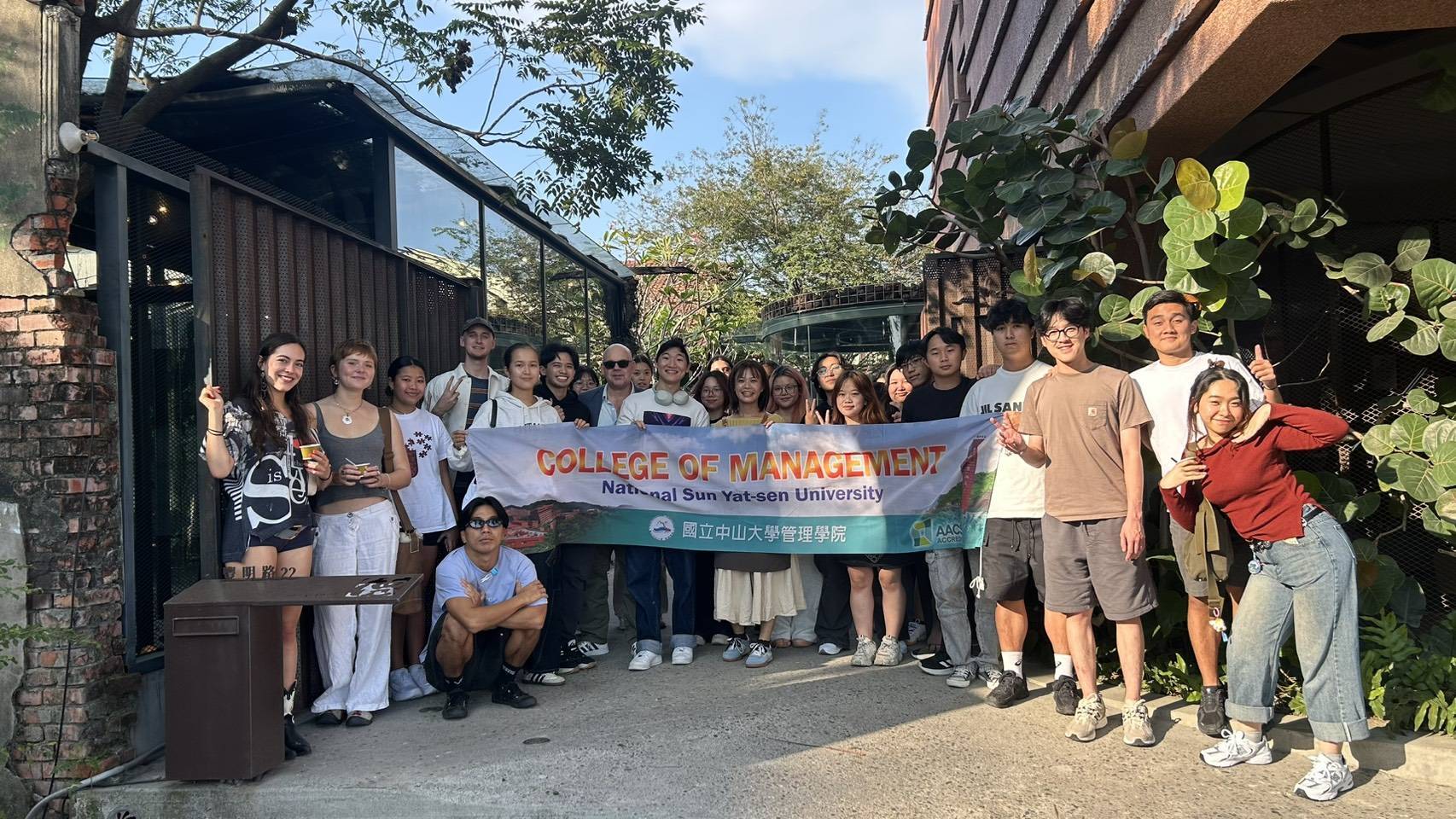
As part of the Sustainability of Global Enterprise (IBBA153) course at National Sun Yat- sen University, Kaohsiung, students joined an eco-tourism field trip to DeHostel (德旅店) in Zhutian Township, Pingtung County. Led by Professor Ryan Brading and supported by the teaching assistant, the visit brought together 25 students spent the afternoon exploring how sustainability, heritage preservation, and rural entrepreneurship are put into practice. The visit gave students a hands-on look at how local businesses can support the environment, protect cultural heritage, and contribute to community development all beyond the classroom.
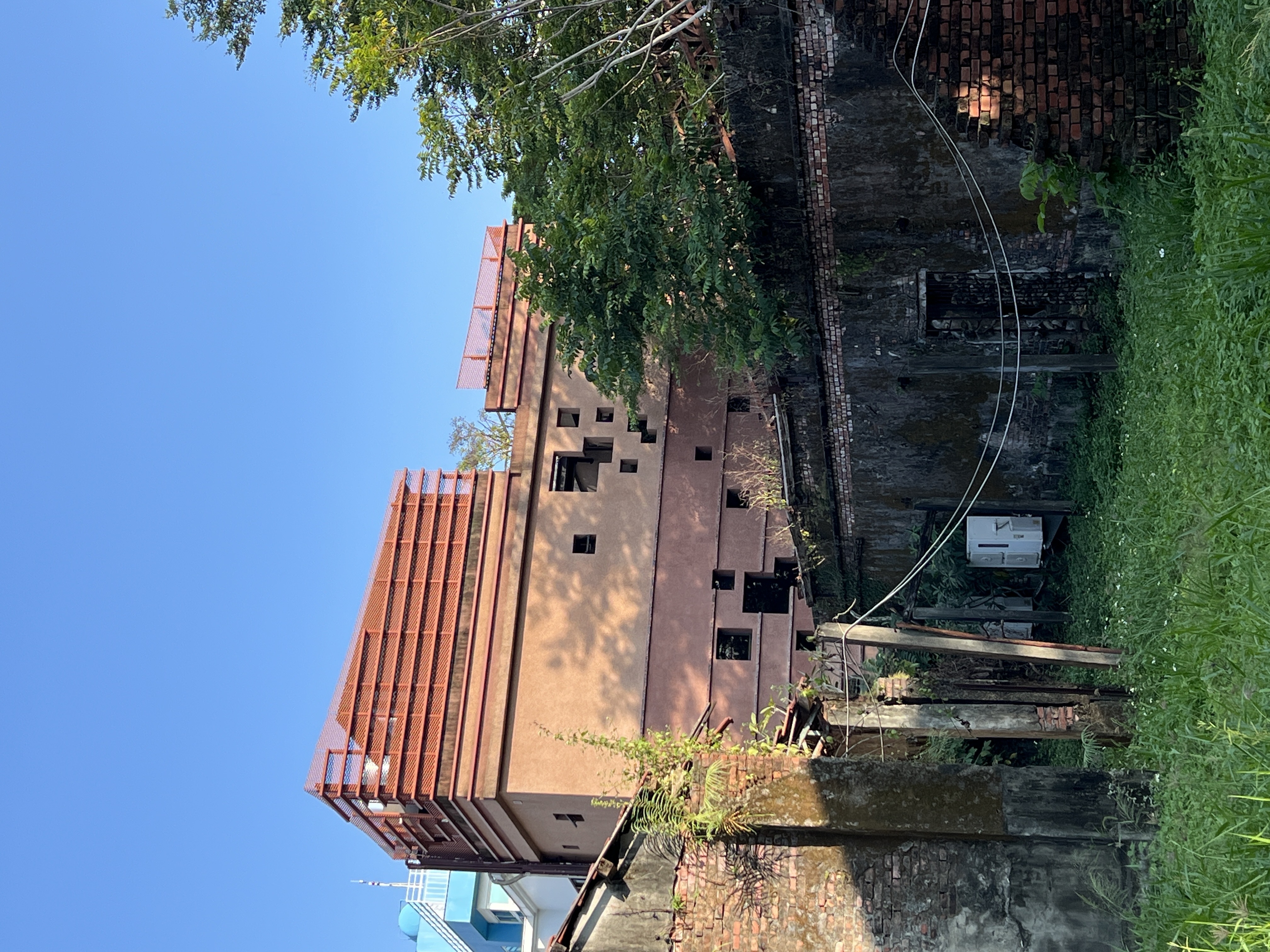
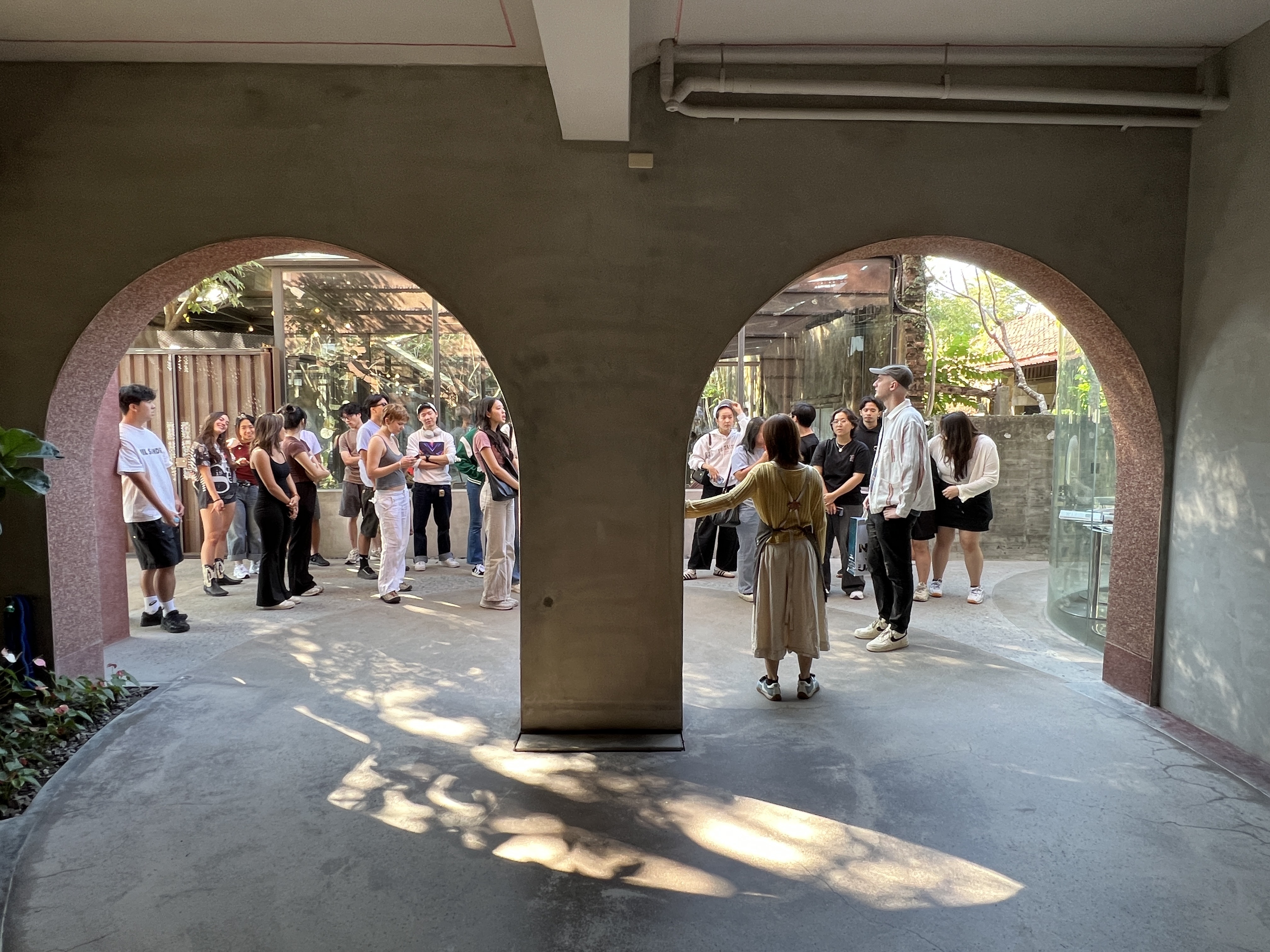
Students were warmly welcomed by the hotel manager, 佳佳, who guided everyone around the property and shared stories about its past. DeHostel is set in a former rice-processing mill built by the founding family in the early 20th century during Japanese colonial rule, around the time the Zhutian railway station was established. As the railway helped Zhutian grow into an agricultural hub, the rice mill became an important part of the local farming community — and its agricultural roots are still part of the space today.
For many years, the rice mill was more than just a place of work — it was also where farmers and local residents gathered to rest, drink tea, and talk. That sense of community has never really disappeared. Under the vision of the current owner, Ms. Jhang Pinjhen (張品蓁), the site was carefully transformed into what it is today, with nearly NT$20 million invested in restoration work carried out by Studio APL (力口建築). Rather than pursuing large-scale redevelopment, she chose adaptive reuse, keeping the original character of the building while turning it into a boutique hotel.
One of the most striking aspects of DeHostel is its commitment to sustainable architectural design. The exterior retains the original industrial form of the rice mill, while the interior emphasizes natural cooling strategies. Corridors and shared spaces rely on airflow, water features, shading, and spatial orientation instead of air conditioning, which is reserved only for guest rooms. This design approach significantly reduces energy consumption while enhancing comfort and environmental harmony.
The hotel also preserves physical traces of its agricultural past. Students noticed original details such as a rice-measuring scale, where each horizontal line once marked a unit of rice by volume. One old Japanese-made safebox has also been kept on site, offering a small but telling reminder of the building’s earlier use. Together with preserved structural elements, these features show that DeHostel is not just themed around history but genuinely shaped by it.
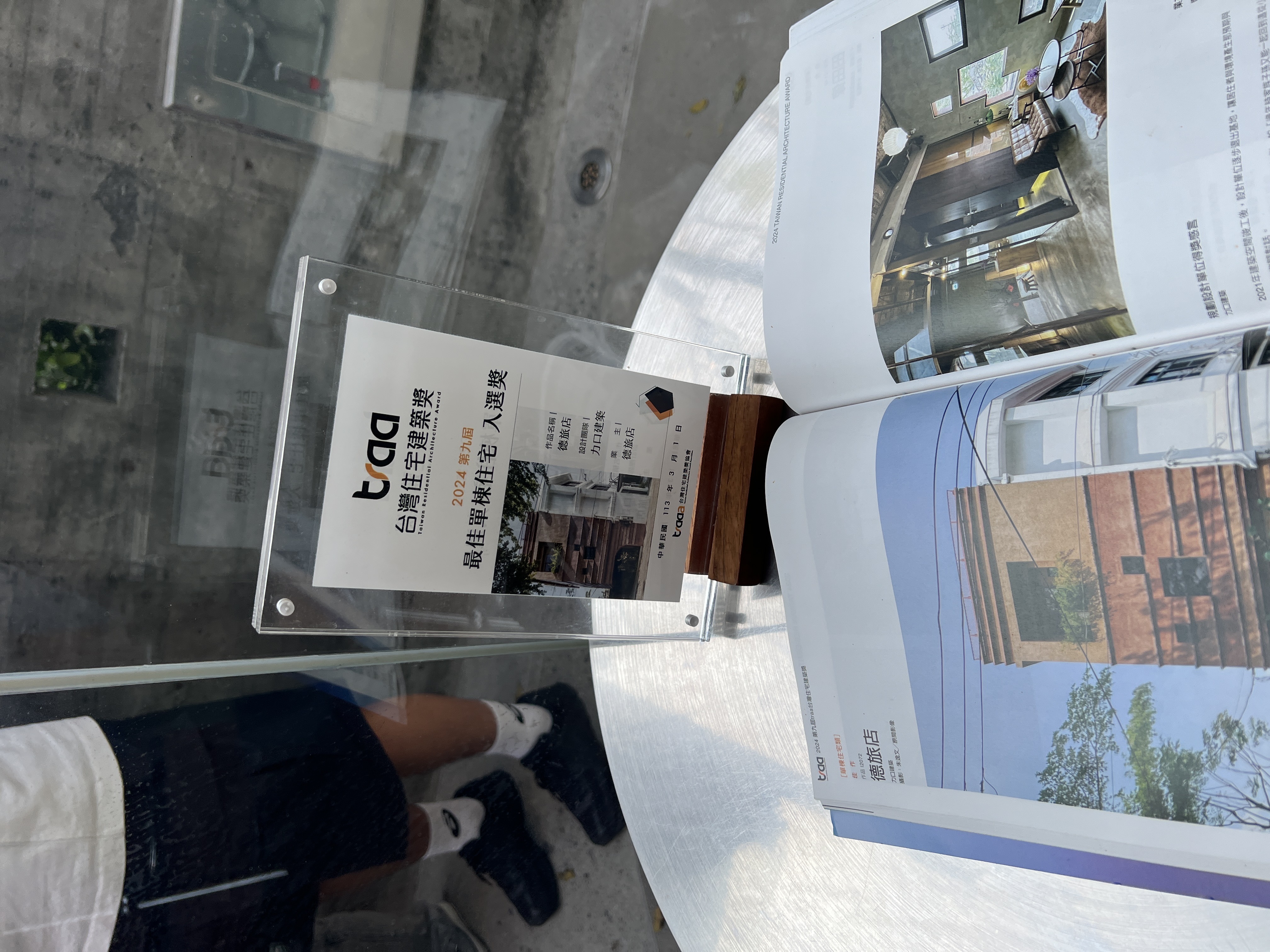
DeHostel’s approach to preserving heritage while operating responsibly has also been recognised through several sustainability-related awards, including the SDA in 2022. For students, these recognitions helped show how small-scale projects can gain wider attention when environmental care, community connection, and thoughtful design come together.
Although DeHostel is in a rural area near the mountains of Pingtung, students noticed how easy it is to reach thanks to its location right next to Zhutian Station. This makes it a good example of low-carbon tourism that relies on public transportation rather than car travel. The visit also showed how a small, well-managed hospitality business can remain economically viable while still staying true to sustainability principles.
During the visit, students were able to explore almost all areas of the hotel. The only space they could not enter was the presidential suite, which was occupied at the time. Students were told that President Lai Ching-te, the current president of Taiwan, has stayed in the suite, highlighting DeHostel’s growing profile beyond the local level.
For students in the Sustainability of Global Enterprise course, the field trip helped make sustainability feel more concrete. Seeing DeHostel up close showed how family heritage, investment, design choices, and community values can come together in a workable business. The visit also reinforced the idea that sustainability is not just about technology or size, but about long- term thinking, respect for place, and staying connected to local history.
Thanks go to Ms. Jhang Pinjhen and the DeHostel team—especially manager 佳佳—as well as Professor Ryan Brading and the Teaching Assistant Yanek Filipp, for organising and supporting this meaningful learning experience.